
The Ultimate Guide to Tech and Software in 2025
Tech and software shape nearly every part of modern life. From the devices we rely on daily to the advanced systems powering global industries, technology and software fuel productivity, innovation, communication, and growth. This guide breaks down everything people want to know about tech and software, using simple language, real examples, and research-backed insights.
What Is Tech and Software? A Simple Overview
Understanding tech and software begins with recognizing the difference between the physical tools we use (technology) and the digital programs that make those tools useful (software). Even though these two terms are often used interchangeably, they each represent a distinct part of the digital ecosystem—and both matter equally.
Definition of “Tech and Software”
Technology refers to any tool, device, system, or method created to solve a problem or fulfill a need. This includes everything from smartphones and laptops to industrial robots and data centers. Software refers to the programs, applications, and operating systems that tell these devices what to do.
Think of technology as the body and software as the brain. One can’t function meaningfully without the other.
How Technology and Software Work Together
Tech and software operate as a connected ecosystem. Hardware provides the physical components—processors, memory, screens, sensors—while software gives those components purpose. For example:
- A smartphone without software is just a shell of metal, glass, and circuits.
- Software without hardware is useless code with no environment to run in.
Modern systems rely heavily on this partnership. Cloud platforms need server hardware. AI models need GPUs. Smart home devices need both embedded chips and apps to function. This interconnected relationship is what makes the digital world possible.
Why Tech and Software Matter in Today’s Digital World
Tech and software shape everything from how we communicate to how businesses operate. In 2025, nearly every industry depends on digital tools:
- Healthcare uses software for diagnostics, patient records, and medical imaging.
- Education relies on digital classrooms, learning platforms, and AI tutoring tools.
- Finance runs on software that processes transactions, monitors risks, and powers online banking.
- Retail uses software for inventory management, online shopping, and personalized marketing.
- Transportation depends on GPS systems, traffic-management software, and intelligent vehicle technology.
A recent survey shows that over 92% of companies claim software is now critical to their daily operations, and 89% of employees say technology directly affects their productivity.
Quick Comparison: Tech vs. Software
| Category | Technology (Tech) | Software |
|---|---|---|
| Definition | Physical tools, devices, systems | Digital programs and instructions |
| Examples | Phones, laptops, servers, chips | Apps, operating systems, AI tools |
| Purpose | Execute tasks using hardware | Guide hardware to perform functions |
| Dependency | Needs software to operate fully | Needs hardware to run on |
| User Interaction | Physical handling | Digital interface |
Real-World Example: A Smart Home
To understand the relationship between tech and software, consider a smart home setup:
- Tech: Smart thermostat, smart bulbs, smart speakers.
- Software: Mobile apps, voice assistant software, automation scripts.
The thermostat hardware senses temperature, but the software decides when to turn heating on or off. The smart speaker has microphones and chips, but it’s the software that understands voice commands.
Without software, the devices wouldn’t be “smart.”
Without the devices, the software would have nothing to control.
Types of Tech and Software Explained
Understanding the different categories of tech and software helps readers make better decisions about the tools they use at work, at home, and in daily life. This section breaks down the major types, how they function, and why they matter. Because the world of tech and software evolves constantly, knowing these categories gives you a clearer picture of what’s available and how these technologies fit into your needs.
Consumer Technology (Phones, Laptops, Wearables)
Consumer tech includes the devices most people use every day. These tools are designed for convenience, communication, entertainment, and personal productivity. Examples include smartphones, tablets, laptops, smartwatches, earbuds, and smart home devices.
Modern consumer technology relies heavily on integrated software ecosystems. For instance:
- Apple creates seamless integration between iPhones, Macs, iPads, and Watches using software like iOS, macOS, and watchOS.
- Android devices depend on the Android operating system, layered with manufacturer-specific software like Samsung One UI.
- Wearables use health-tracking software powered by AI to measure heart rate, sleep cycles, oxygen levels, and more.
Key consumer tech features include:
- Cloud storage and syncing
- AI-powered assistants (Siri, Google Assistant, Alexa)
- High-resolution cameras powered by computational photography
- Biometric security (face and fingerprint unlock)
- Wireless connectivity (Bluetooth, 5G, Wi-Fi 6/7)
These advancements show how tech and software work together to create user-friendly digital experiences.
Business Technology (Cloud Platforms, Automation Software)
Business technology helps organizations operate more efficiently. From small businesses to large enterprises, companies rely on software to automate tasks, store data, communicate, and manage workflows.
Common business tech tools include:
- Cloud platforms like Google Workspace, Microsoft 365, and AWS
- Project management software like Asana, Trello, and Monday
- Video conferencing tools like Zoom or Teams
- Accounting software like QuickBooks or Xero
- Automation platforms like Zapier or Make
Businesses adopt tech to streamline operations and reduce manual labor. For example, automation software can eliminate repetitive tasks such as data entry, email scheduling, and file organization. Cloud computing replaces physical servers and gives companies fast, secure access to data anywhere in the world.
Impact on productivity:
- Companies using automation report a 30–50% increase in task efficiency.
- Teams with modern software workflows reduce operational costs by 20–40%.
- Cloud technology improves collaboration among distributed teams by over 60% according to industry surveys.
Enterprise Software (CRM, ERP, HR Tech)
Enterprise software is designed for large organizations with complex needs. These systems are powerful, scalable, and built to support entire departments.
Popular enterprise software categories include:
- CRM (Customer Relationship Management): Salesforce, HubSpot, Zoho
- ERP (Enterprise Resource Planning): SAP, Oracle, Microsoft Dynamics
- HR Software: Workday, BambooHR, ADP
- IT Management Software: ServiceNow, Jira, Splunk
These tools centralize business data and processes into one system, improving efficiency and reducing errors. For instance, ERP software connects departments like finance, inventory, human resources, and logistics so everything operates on the same platform.
Why it matters:
Enterprise organizations use these tools to handle millions of transactions, track thousands of employees, and manage global operations—all made possible through sophisticated tech and software.
SaaS (Software-as-a-Service) and Why It’s Growing
SaaS refers to software that is hosted online and accessed through a web browser or mobile app. Instead of installing software on a device, users subscribe to it monthly or annually.
Examples of SaaS tools:
- Canva
- Slack
- Shopify
- Dropbox
- Notion
- Zoom
SaaS is popular because it’s:
- Affordable: No large upfront cost
- Accessible: Works on any device
- Automatic: Updates happen behind the scenes
- Scalable: Businesses can increase or decrease usage anytime
SaaS is one of the fastest-growing sectors in tech and software, with industry researchers predicting it will exceed $1 trillion by 2032 as more businesses transition to cloud-based systems.
Open-Source vs. Proprietary Software
There are two major categories of software licensing:
Open-source software:
- The code is public and can be modified by anyone.
- Popular examples: Linux, WordPress, Blender, Firefox
- Benefits: free, customizable, community-supported
Proprietary software:
- Owned by companies and protected by license restrictions.
- Popular examples: Windows, Photoshop, Final Cut Pro, Microsoft Office
- Benefits: polished interfaces, customer support, frequent updates
Open-source software is often favored by developers and tech enthusiasts, while proprietary tools appeal to consumers, professionals, and businesses that want reliability without manual customization.
Mobile Apps vs. Desktop Software
While both are types of software, they differ in terms of performance, flexibility, and installation:
| Feature | Mobile Apps | Desktop Software |
|---|---|---|
| Platform | Phones, tablets | PCs, laptops |
| Performance | Light, optimized | Powerful, resource-heavy |
| Features | Touch-based interactions | Complex tools and functions |
| Installation | App stores | Direct downloads or installers |
| Use Cases | Messaging, social media, mobile games, tools | Graphic design, development, editing, gaming, 3D modeling |
Today, many companies build cross-platform software, offering both an app and a desktop version. This allows users to switch between devices without losing progress, thanks to cloud syncing.
Key Tech and Software Trends Shaping 2025
The evolution of tech and software is accelerating faster than ever. In 2025, major innovations across artificial intelligence, cybersecurity, automation, and immersive technologies are transforming how people live and how businesses operate. This section explores the most important trends shaping the future and explains why each trend matters. These trends are backed by industry research, real-world examples, and expert predictions so readers can clearly understand where technology is heading.
AI and Machine Learning Tools in Everyday Software
Artificial Intelligence (AI) and Machine Learning (ML) are no longer futuristic buzzwords—they’re built into almost every modern device and software platform. From AI-powered search results to automated photo editing, AI quietly enhances daily life.
Where AI shows up today:
- Search engines that understand intent
- Email apps that filter spam automatically
- Cameras that use AI for image stabilization and color correction
- Voice assistants that adapt to your speech patterns
- Video platforms that recommend content
- Productivity tools that summarize text or analyze data
AI is also transforming business software by streamlining tasks such as customer service (AI chatbots), data analysis (predictive modeling), and marketing (AI targeting and segmentation).
A Forbes report shows that nearly 70% of businesses have already adopted AI software in some form, and the number continues to rise as tools become more accessible.
Automation and No-Code Platforms
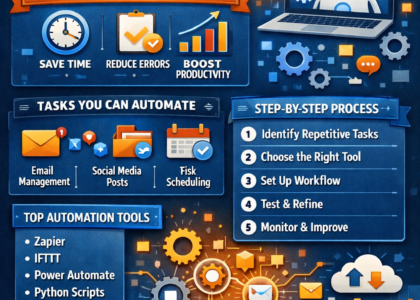
Automation software is becoming essential for both individuals and companies wanting to work faster and reduce repetitive tasks. No-code platforms like Zapier, Airtable, Notion, and Make allow non-technical users to create workflows or even fully functional apps without writing a single line of code.
Common automation examples include:
- Auto-sending emails based on triggers
- Syncing files between cloud platforms
- Generating reports automatically
- Tracking tasks across multiple tools
- Creating customer support workflows
Businesses that adopt automation report dramatic improvements. According to McKinsey, organizations using automation see up to a 50% reduction in manual workload and repetitive tasks.
Because of this, no-code platforms are one of the fastest-growing segments in tech and software—a trend likely to continue for years.
Cybersecurity Advancements and Rising Threats
As more data moves online, cyber threats grow more complex. In 2025, cybersecurity is no longer an optional part of tech—it’s a requirement.
Common cyber threats include:
- Ransomware attacks
- Phishing emails
- Identity theft
- Data breaches
- Malware and spyware
- Cloud vulnerabilities
To combat these threats, new cybersecurity software relies on AI to detect suspicious behavior in real time. For example, modern security tools can recognize unusual login attempts, detect risky file downloads, or spot unauthorized access before damage occurs.
Key cybersecurity trends in 2025:
- Zero-trust authentication
- Multi-factor authentication (MFA)
- AI-driven threat detection
- Biometric security improvements
- Encrypted cloud infrastructures
Experts predict the global cybersecurity market will reach $300 billion by 2026, driven by increased remote work and digital transformation.
Cloud Computing and Hybrid Infrastructure
Cloud computing remains one of the most influential shifts in tech and software. It allows businesses and consumers to access data, apps, and services from anywhere.
Today, companies are moving beyond basic cloud computing into hybrid infrastructures, which combine:
- Public clouds (AWS, Google Cloud, Azure)
- Private clouds (internal company servers)
- On-premise systems
This hybrid approach improves reliability, security, and scalability.
Why cloud + hybrid systems are growing:
- They reduce cost on physical hardware
- They support remote and global teams
- They improve performance with distributed systems
- They offer better disaster recovery and backup options
A survey from Gartner indicates that 90% of enterprises will adopt hybrid cloud strategies by 2026, making it one of the strongest ongoing trends in tech and software.
The Rise of Edge Computing
While cloud computing stores data remotely, edge computing processes data closer to where it’s generated. This reduces latency and improves performance, especially for real-time applications.
Edge computing is essential for:
- Smart home devices
- Autonomous vehicles
- Robotics
- IoT (Internet of Things)
- Smart cities
- Healthcare monitoring devices
For example, a self-driving car cannot wait for cloud servers to make a decision. It needs instant processing—which edge computing provides. With billions of devices now connected to the internet, edge computing is becoming a critical part of the digital ecosystem.
Quantum Computing Breakthroughs
Quantum computing is still early in development, but recent advancements suggest a revolutionary future. Unlike traditional computers that process data in bits (0 or 1), quantum computers use qubits, which can be both 0 and 1 simultaneously. This allows them to solve complex problems dramatically faster.
Potential uses include:
- Drug discovery
- Climate modeling
- Cryptography
- Financial forecasting
- Optimization problems
Tech giants like IBM and Google are racing to build scalable quantum systems. Experts predict that by the early 2030s, quantum computing could become commercially viable, introducing a new era of super-computing power.
Growth of AR/VR and Immersive Software
Augmented Reality (AR) and Virtual Reality (VR) technologies are moving beyond gaming and into mainstream use. In 2025, major industries are adopting immersive software to train employees, assist customers, and enhance entertainment.
Examples of immersive tech include:
- AR glasses for navigation or workplace instructions
- VR headsets for remote training simulations
- AR-enabled shopping experiences
- Virtual classrooms and meetings
Businesses using VR for training report:
- 40% faster skill acquisition
- 70% lower training costs
- Higher engagement than traditional methods
As tech becomes lighter and more affordable, AR/VR will continue to evolve into one of the biggest long-term trends in tech and software.
Sustainability and Green Tech Innovations
With growing concerns about energy consumption and climate impact, sustainability is becoming a defining trend in the tech world. Green tech focuses on reducing carbon footprints, improving energy efficiency, and minimizing electronic waste.
Key green tech innovations include:
- Energy-efficient chips and processors
- Solar-powered devices
- Biodegradable electronics
- Recyclable hardware components
- Smart energy grids
- Cloud platforms using renewable power
Research shows that data centers account for nearly 3% of global electricity use, which is why major companies like Google and Amazon have committed to becoming fully carbon-neutral.
How Tech and Software Impact Everyday Life
Tech and software shape nearly every interaction we have—from how we communicate, shop, and learn to how businesses deliver services and governments operate. In 2025, digital tools are woven so deeply into daily living that most people use dozens of software applications without even realizing it. Understanding these impacts helps readers appreciate the value of technology and make smarter decisions about the tools they adopt.
How Software Powers Your Phone, Smart Home, and Entertainment
Most consumers interact with tech and software through everyday devices. Your smartphone alone runs dozens of systems that work silently in the background to improve your experience.
Examples of everyday software you use without noticing:
- Operating systems (Android, iOS) that manage everything from battery use to app performance
- AI-driven camera software that enhances photos instantly
- Predictive text that learns your typing style
- Music apps that recommend playlists based on listening habits
- Streaming platforms that use algorithms to find shows you’ll love
- Smart home apps that control lights, thermostats, and security cameras
- Health apps that track steps, workouts, and sleep patterns
Even your car depends on software. Modern vehicles have 50–150 onboard computers, making them essentially “smart devices on wheels.”
Every time you scroll Netflix, unlock your phone with your face, or check the weather, you’re interacting with tech and software designed to make life more convenient.
How Businesses Use Tech to Improve Productivity
In the workplace, technology is the backbone of modern business operations. From employee communication to data management, organizations rely on software to streamline processes, reduce errors, and improve performance.
Examples of workplace tech and software:
- Collaboration tools like Slack, Teams, and Zoom
- Cloud-based file sharing such as Google Drive and Dropbox
- Project management tools such as Asana, Trello, and ClickUp
- CRM systems that track sales and customer interaction
- Automation software that eliminates data entry tasks
- Analytics platforms that visualize performance metrics
A recent study by Deloitte found that companies using digital tools effectively experience:
- 33% higher productivity
- 28% faster decision-making
- 30–50% lower operational costs
With remote work becoming the new norm, organizations must rely on cloud-based systems to keep teams connected. This shift has accelerated adoption of software tools that support messaging, task tracking, and file collaboration.
Businesses that invest in tech and software gain a competitive edge because their workflows are faster, smarter, and more efficient.
How Software Enhances Learning, Work, and Communication
The rise of digital platforms has transformed how people communicate, learn new skills, and collaborate with others. Education is one of the sectors most affected by advancements in tech and software.
Examples of software used in education:
- Online learning platforms like Khan Academy, Udemy, Coursera
- Virtual classrooms with video conferencing tools
- AI-driven tutoring apps
- Learning management systems (LMS) used by schools and universities
- Note-taking apps that sync across devices
Students today can attend online classes, submit homework through cloud platforms, and receive instant feedback thanks to AI-powered grading systems. Even language-learning tools (like Duolingo) use machine learning to customize lesson paths for each student.
Communication has become more seamless as well. Messaging apps, video calls, and social networks allow people to stay connected with family, friends, and coworkers across the globe. The average person uses seven different communication apps daily, according to industry data.
The Role of Tech and Software in Healthcare, Finance, and Transportation
Some of the biggest transformations driven by tech and software can be seen in critical industries that support everyday life.
1. Healthcare
Modern healthcare relies on digital systems to save lives.
Examples include:
- Electronic health records (EHRs)
- Telemedicine platforms
- AI-based diagnostic tools
- Robotic surgery systems
- Wearable health monitors
AI helps doctors detect diseases earlier, while telehealth gives patients faster access to care. Remote patient monitoring software allows doctors to track heart rates, oxygen levels, and more in real time.
2. Finance
Finance is one of the most software-dependent industries today.
Common fintech tools:
- Mobile banking apps
- Investment platforms like Robinhood or E*TRADE
- Fraud-detection software
- Crypto wallets and blockchain systems
- Contactless payment platforms
Banks use machine learning to detect fraudulent transactions instantly. Stock trading is powered by algorithms that analyze millions of data points per second.
3. Transportation
From GPS navigation to ride-sharing apps, transportation depends heavily on tech.
Examples:
- Google Maps and navigation tools
- Electric vehicle software systems
- Self-driving car software
- Flight scheduling and safety systems
- Public transit tracking apps
Airplanes, buses, and trains rely on software for safety monitoring, scheduling, and route optimization. Meanwhile, Uber and Lyft disrupted the entire taxi industry with mobile app software.
Why Everyday Tech and Software Continue to Expand
The reliance on digital tools grows each year due to several key factors:
- People demand convenience and real-time access to information.
- Businesses want automation and efficiency.
- Governments adopt data systems for public service delivery.
- New generations grow up fully immersed in technology.
- AI is accelerating innovation across nearly every industry.
As tech continues to advance, software becomes more capable of solving everyday problems—from entertainment to transportation to health.
Choosing the Right Tech and Software for Your Needs
Choosing the right tech and software can feel overwhelming because there are thousands of tools available—each promising to make life easier, more productive, or more efficient. Whether you’re selecting apps for personal use or trying to find the best platforms for your business, understanding what to look for helps avoid costly mistakes. This section explains the most important factors to consider, offers practical checklists, and highlights common pitfalls people face when selecting digital tools.
Questions to Ask Before Choosing Any Software
Before downloading or subscribing to any new software, it helps to ask practical questions that clarify your needs. Many people choose tech tools because they’re popular, not because they solve their real problems. The right questions eliminate confusion and save money.
Ask yourself:
- What problem am I trying to solve?
Be specific—“manage my business better” is vague; “track client invoices and payments” is clear. - Is this software necessary, or do I already have a tool that works?
Many users end up with duplicate apps that do the same thing. - What features do I actually need?
Avoid getting distracted by features that sound cool but aren’t useful. - What is my budget?
Some tools have hidden costs (add-ons, storage fees, user fees). - Is the software easy to learn?
Complicated tools slow down productivity if they require weeks of training. - Does it work on all my devices?
Cross-device compatibility is essential for convenience and performance. - How secure is the software?
Always check for encryption, privacy policies, and authentication options.
Free vs. Paid Software Options
Every category of tech and software has both free and paid versions. Each option has advantages and limitations.
Free Software Advantages:
- No cost
- Ideal for beginners
- Often open-source and customizable
- Easy to test before committing
Free Software Disadvantages:
- Limited features
- Ads or usage restrictions
- Fewer security options
- Lower customer support
Paid Software Advantages:
- Professional-grade features
- Better security and backups
- Updates and customer support
- Integrates easily with other tools
Paid Software Disadvantages:
- Subscription fees
- Add-on costs
- Learning curve may be higher
General rule:
- Use free software for personal tasks or trials.
- Use paid software for business, growth, or mission-critical needs.
A study by Capterra found that 72% of small businesses eventually upgrade from free tools to paid software once they grow beyond 3–5 team members.
Evaluating Features, Pricing, and Ease of Use
It’s important not to choose software based solely on popularity or first impressions. Instead, evaluate it using three critical factors: features, pricing, and ease of use.
1. Features
Ask whether the software includes tools you’ll actually use. Many apps boast fancy features that look exciting but don’t improve productivity. Focus on the essentials.
Helpful checklist:
- Does it include automation?
- Does it integrate with your existing tools?
- Does it have mobile and desktop versions?
- Does it scale as your needs grow?
2. Pricing
Pricing varies widely. Some tools cost a few dollars a month, while enterprise software can cost thousands.
Compare:
- Monthly vs. yearly plans
- User-per-seat fees
- Upgrade costs
- Storage or bandwidth limits
3. Ease of Use
Even if a tool is powerful, it must be easy to learn.
Look for:
- Clean interface
- Simple navigation
- Tutorials and documentation
- Customer support availability
If a tool takes weeks to understand, it may not be worth the investment.
How to Compare Competing Tech Tools
When choosing between similar types of software, comparing them side by side helps visualize strengths and weaknesses.
Example Comparison Table: Project Management Tools
| Feature | Asana | Trello | ClickUp |
|---|---|---|---|
| Ease of Use | Moderate | Very Easy | Moderate |
| Automation | Strong | Limited | Strong |
| Views | Lists, boards, timelines | Boards only | Lists, boards, calendars |
| Integrations | Excellent | Good | Excellent |
| Best For | Teams & businesses | Beginners | Complex workflows |
Comparison charts like this make the decision process clearer and help highlight which tool matches your specific workflow.
How to Know if Software Is Secure
Security is one of the most overlooked yet most important aspects of choosing tech and software. Many users unknowingly install tools that collect too much data or lack proper encryption.
Security checklist to follow:
- Does the software use HTTPS encryption?
- Does it offer multi-factor authentication (MFA)?
- Is the company transparent about how your data is used?
- Does it comply with privacy standards like GDPR or CCPA?
- Is there a history of data breaches?
- Does it offer regular security updates?
Experts recommend choosing software from reputable companies with clear privacy policies—not from unknown or outdated sources.
Red Flags to Avoid When Choosing Tech and Software
Before we move to the next section, here are warning signs that software may not be trustworthy:
- No official website or business information
- Few user reviews or overwhelmingly negative reviews
- No security options or outdated interface
- Sudden price increases after trial period
- Poor customer support
- Aggressive data collection practices
If any of these appear, reconsider the software immediately.
Essential Software Tools Everyone Should Know
In today’s digital world, there are certain categories of tech and software that almost everyone—students, professionals, entrepreneurs, and everyday users—should be familiar with. These essential tools make life easier, more organized, and more productive. Below is a detailed breakdown of the most widely used types of software, why they matter, and examples of the top tools in each category. Understanding these essentials helps users build a strong digital foundation that supports work, creativity, communication, and personal growth.
Productivity Software (Docs, Sheets, Collaboration Tools)
Productivity software is the backbone of modern work and personal organization. These tools help users create documents, track tasks, organize schedules, and collaborate with others seamlessly.
Why productivity software matters:
- Helps manage daily tasks
- Improves communication between teams
- Enables real-time collaboration
- Stores documents securely in the cloud
- Reduces email overload
Popular productivity tools include:
- Google Workspace: Docs, Sheets, Slides, Drive
- Microsoft Office 365: Word, Excel, PowerPoint, OneDrive
- Notion: All-in-one workspace for notes, databases, and tasks
- Evernote: Notes, research, and personal organization
- Trello: Visual task tracking using boards
- Asana: Team task management
Case Study: Google Workspace Adoption
A study by IDC found that teams using Google Workspace saw:
- 27% faster collaboration
- 20% improvement in document management efficiency
- 24% cost reduction compared to local storage systems
Tools like these are essential in both personal and professional environments because they keep information organized and accessible.
Security Tools (Password Managers, VPNs, Antivirus)
Security software is crucial for protecting your devices, data, and online identity. As cyber threats continue to rise, these tools help safeguard personal and business information.
Types of essential security software:
- Password managers: Generate and store complex passwords
- VPNs: Encrypt your internet connection
- Antivirus/anti-malware software: Protect devices from threats
- Firewall software: Blocks unauthorized access
Common security tools include:
- LastPass, 1Password, Bitwarden (password management)
- NordVPN, ExpressVPN, ProtonVPN (secure browsing)
- Bitdefender, Norton, McAfee (malware protection)
Statistics to consider:
- Over 80% of data breaches involve weak or stolen passwords.
- VPN usage grew 76% worldwide after 2020 due to remote work.
Security tools are essential because they create multiple layers of protection, making it harder for hackers to compromise your personal or business information.
Creative Software (Photo Editing, Video Editing, Design Tools)
Creative software empowers users to produce digital content—from social media graphics to professional videos. As the demand for content increases, these tools become essential for both creators and businesses.
Key categories of creative software:
- Photo editing
- Video editing
- Graphic design
- 3D modeling
- Animation
Popular tools include:
- Adobe Creative Cloud: Photoshop, Illustrator, Premiere Pro
- Canva: User-friendly graphic design for beginners
- Figma: UI/UX design and collaboration
- DaVinci Resolve: Professional video editing
- Blender: Free 3D modeling and animation tool
Why creative tools matter:
- Businesses need high-quality visuals
- Creators need tools to make engaging content
- Students use them for projects and presentations
- Social media trends demand visual storytelling
Even non-creatives benefit because tools like Canva make it easy to produce polished graphics without prior design experience.
Communication Software (Video Conferencing, Messaging Apps)
Communication tools make it possible to connect with others instantly, whether they are across the room or across the world. With remote work and virtual learning now mainstream, these apps have become essential.
Most widely used communication tools:
- Zoom: Video meetings and webinars
- Microsoft Teams: Corporate communication and collaboration
- Slack: Workplace messaging and channels
- Google Meet: Simple video conferencing
- Discord: Community chat for voice, video, and text
Impact of communication software:
- Enables remote teams to collaborate
- Reduces the need for physical meetings
- Supports global communication and virtual events
- Improves team alignment and transparency
According to Statista, video conferencing software usage increased by 535% between 2020 and 2024—a trend that continues into 2025.
Cloud Storage and Backup Tools
Cloud storage is essential for keeping files accessible, shareable, and secure. Backup tools protect your data in case of device failure, accidents, or cyberattacks.
Most common cloud and backup tools:
- Google Drive
- Dropbox
- iCloud
- OneDrive
- Backblaze (automatic PC and Mac backups)
Benefits of cloud storage include:
- Access files from any device
- Instant sharing and collaboration
- Secure storage with encryption
- No risk of losing files from device damage
Data insights:
- Over 1.2 billion people worldwide use cloud storage.
- 40% of users rely on at least two cloud platforms.
Cloud tools have become a central part of modern tech and software because they support the run-anywhere lifestyle people have adopted today.
Why These Tools Matter in Everyday Life
These essential software categories support nearly every aspect of digital living:
- Work: Managing tasks, writing documents, communicating with teams
- Safety: Protecting data from rising cyber threats
- Creativity: Producing high-quality visual and video content
- Personal life: Storing photos, accessing files on the go, messaging friends
- Education: Taking online courses, submitting assignments, studying online
Mastering these tools improves digital literacy—an increasingly important skill for both personal and professional success.