

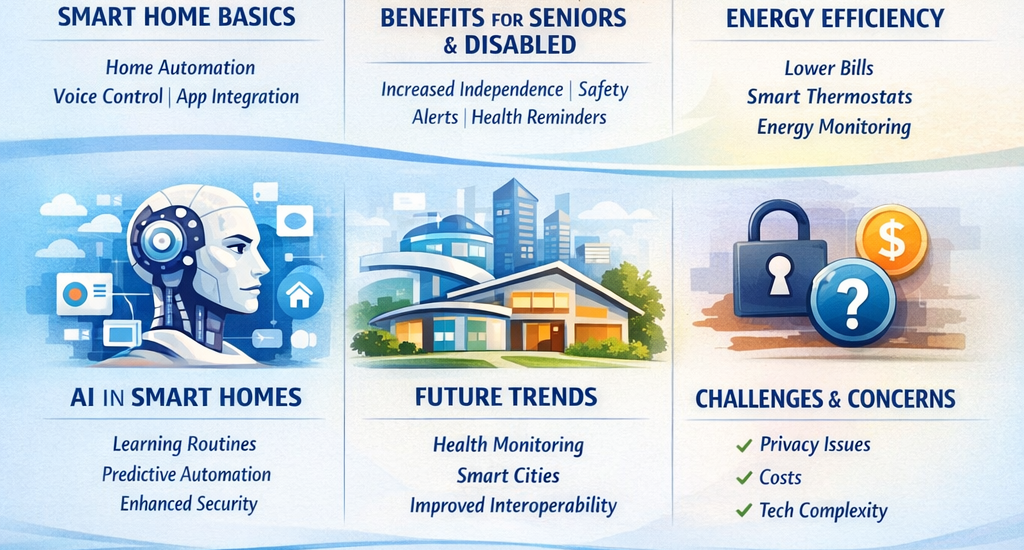
How smart home technology will change lives is no longer a futuristic idea—it is already happening inside millions of homes around the world. From voice-controlled lights to AI-powered security systems, smart home technology is reshaping how people live, work, relax, and stay safe. What once felt like science fiction is quickly becoming an everyday reality for homeowners, renters, families, and seniors alike.
At its core, smart home technology connects devices, systems, and appliances to the internet so they can communicate with each other and respond intelligently to human behavior. This shift is changing homes from passive spaces into responsive environments that adapt to individual needs. Lights turn on automatically, thermostats learn your preferences, and security systems alert you in real time—all without constant manual input.
The rapid growth of smart homes is driven by several powerful factors:
- Advancements in artificial intelligence (AI)
- Widespread internet and smartphone adoption
- Rising demand for convenience and efficiency
- Increased focus on energy savings and sustainability
- Aging populations seeking independent living solutions
According to industry data, the global smart home market is expected to grow significantly over the next decade as devices become more affordable, easier to install, and more compatible across ecosystems. What was once considered a luxury is now becoming a practical solution for improving quality of life.
“Smart homes are not about gadgets—they’re about improving human experience through intelligent environments.”
This article explores how smart home technology will change lives in meaningful and lasting ways. You’ll learn how it impacts daily routines, safety, health, energy usage, family life, and the future of housing itself. Whether you’re a beginner curious about smart devices or someone considering building a fully automated home, this guide will give you a clear and practical understanding of why smart home technology matters.
Smart home technology refers to a network of connected devices and systems that automate, monitor, and control different functions inside a home. These technologies work together to make living spaces more intelligent, efficient, and responsive to the people inside them. Instead of manually adjusting appliances or systems, smart homes use data, sensors, and internet connectivity to make decisions automatically or with minimal user input.
At a high level, smart home technology combines three core elements:
- Connected devices (hardware like lights, locks, and thermostats)
- Software and apps that control and manage those devices
- Artificial intelligence and automation that learn user behavior
Together, these elements create an ecosystem where your home can “think,” adapt, and respond.
Smart Home Technology Explained in Simple Terms
In simple language, a smart home is a home that can listen, learn, and respond. Devices are connected through Wi-Fi, Bluetooth, or specialized protocols, allowing them to share information and follow instructions. Most smart homes are controlled through:
- Smartphone apps
- Voice assistants like Alexa, Google Assistant, or Siri
- Automated routines that run in the background
For example:
- When you say, “Turn off the lights,” the system responds instantly.
- When you leave home, your smart lock secures the door and the thermostat lowers the temperature automatically.
- When motion is detected at night, outdoor lights turn on without you touching a switch.
This level of automation shows clearly how smart home technology will change lives, especially for people who value time, comfort, and control.
How Smart Home Devices Communicate (The IoT Basics)
Smart homes rely on the Internet of Things (IoT). IoT allows physical devices to collect and exchange data over the internet. Each smart device includes:
- Sensors (to detect motion, temperature, light, or sound)
- Connectivity (Wi-Fi, Zigbee, Z-Wave, Bluetooth)
- Software to interpret and act on data
Here’s a simple breakdown:
| Component | What It Does |
|---|---|
| Sensors | Detect changes in the environment |
| Connectivity | Sends data to other devices or apps |
| Automation | Triggers actions based on rules |
| AI | Learns habits and predicts preferences |
As these systems improve, homes become more autonomous, reducing the need for constant user input.
Common Smart Home Devices Used Today
Smart home technology includes a wide range of devices that serve different purposes. Some of the most common include:
Smart Speakers and Voice Assistants
- Act as the central hub for controlling devices
- Answer questions, play music, and manage schedules
- Examples: Amazon Echo, Google Nest, Apple HomePod
Smart Lighting Systems
- Adjust brightness and color automatically
- Reduce energy waste
- Can be controlled remotely or via schedules
Smart Thermostats
- Learn temperature preferences
- Optimize heating and cooling
- Reduce energy bills by up to 10–15% in many homes
Smart Security Devices
- Video doorbells, cameras, and motion sensors
- Real-time alerts on smartphones
- Remote monitoring from anywhere
Smart Appliances
- Refrigerators that track food inventory
- Washing machines that run during off-peak hours
- Ovens that can be preheated remotely
Smart Homes vs. Traditional Homes
The difference between a smart home and a traditional home goes beyond convenience.
| Feature | Traditional Home | Smart Home |
|---|---|---|
| Control | Manual | Automated & remote |
| Energy Use | Fixed | Optimized |
| Security | Reactive | Proactive |
| Comfort | Static | Personalized |
| Data Insights | None | Continuous feedback |
This transformation highlights how smart home technology will change lives by shifting homes from passive structures into active, supportive environments.
One of the most noticeable ways how smart home technology will change lives is through its impact on everyday routines. Small, repetitive tasks that once required constant attention are now automated, streamlined, or eliminated entirely. Over time, these small improvements add up to less stress, more time, and better quality of life.
Smart homes are not just about flashy gadgets. They are about reducing friction in daily living and allowing people to focus on what matters most—family, work, rest, and well-being.
Making Daily Tasks Faster and Easier
Smart home technology excels at handling repetitive and time-consuming tasks. By automating these activities, people can reclaim hours each week without sacrificing comfort or control.
Examples of daily task automation include:
- Lights turning off automatically when rooms are empty
- Coffee machines starting when your morning alarm goes off
- Robot vacuums cleaning floors on a set schedule
- Smart plugs shutting off unused electronics
A study on household automation found that smart homes can reduce daily manual interactions with home systems by up to 30–40%, especially in larger households. This efficiency is particularly valuable for busy professionals, parents, and older adults.
“Automation doesn’t remove control—it removes unnecessary effort.”
Over time, users begin to rely on smart systems not because they are novel, but because they are dependable.
Voice Control and Hands-Free Living
Voice assistants are one of the most transformative elements of smart home technology. They allow users to interact with their homes naturally, without screens or switches.
Common voice commands include:
- “Turn off all lights”
- “Set the thermostat to 72 degrees”
- “Lock the front door”
- “What’s on my schedule today?”
Hands-free control is especially impactful for:
- Cooking and multitasking
- People with mobility challenges
- Seniors who prefer simple interactions
This is a clear example of how smart home technology will change lives by making homes more accessible and intuitive.
Smart Routines That Adapt to Your Lifestyle
Smart home routines connect multiple devices into a single automated workflow. Instead of managing each device individually, routines allow homes to respond holistically.
Examples of popular routines:
- Morning Routine
- Gradual light brightening
- Thermostat warming the house
- News briefing through smart speakers
- Leaving Home Routine
- Lights turn off
- Doors lock automatically
- Security system activates
- Night Routine
- Lights dim
- Doors secure
- Thermostat adjusts for sleep
These routines reduce decision fatigue and create consistency in daily life.
Improving Comfort and Convenience at Home
Comfort in a smart home is personalized. Devices learn preferences and adapt automatically, creating an environment that feels tailored rather than static.
Key comfort improvements include:
- Temperature adjustments based on time of day
- Lighting that matches mood or activity
- Music and entertainment that follow users from room to room
According to user surveys, over 70% of smart home users report feeling more comfortable in their homes after installing automation systems.
Personalization Through Learning Behavior
Advanced smart homes use AI to analyze behavior patterns. Over time, systems begin to predict needs instead of waiting for commands.
For example:
- Thermostats learn when you are home or away
- Lights adjust based on natural daylight levels
- Security systems recognize familiar activity patterns
This shift from reactive to proactive behavior shows how smart homes are evolving into living systems rather than static structures.
Case Study: A Typical Smart Home Day
Before Smart Home Technology
- Manual thermostat adjustments
- Forgotten lights left on
- Rushed mornings
After Smart Home Technology
- Automated temperature control
- Energy-efficient lighting
- Structured, calm routines
This transformation demonstrates how smart home technology will change lives by improving daily flow and reducing unnecessary stress.
Home automation is the foundation that makes smart homes truly intelligent. While individual smart devices add convenience, automation is what transforms a house into a responsive living environment. This is a critical reason how smart home technology will change lives in deeper and more lasting ways.
Automation removes the need for constant interaction. Instead of reacting to situations, the home anticipates them.
What Is Home Automation and Why It Matters
Home automation refers to the use of technology to control multiple household systems automatically based on predefined rules, schedules, or real-time data. These systems operate in the background, often without users even noticing.
Unlike simple smart devices, automated homes:
- Connect multiple systems together
- Respond to environmental triggers
- Adjust continuously without commands
Key automation triggers include:
- Time of day
- Occupancy or motion
- Weather conditions
- User location (geofencing)
For example, when rain is detected, windows may close automatically. When no one is home, heating and cooling systems reduce energy usage.
This shift from manual control to autonomous operation highlights how smart home technology will change lives by minimizing daily effort.
Smart Devices vs. Fully Automated Homes
Many people confuse smart devices with full automation. The difference is important.
| Feature | Smart Devices | Fully Automated Homes |
|---|---|---|
| Control | User-initiated | System-initiated |
| Efficiency | Moderate | High |
| Personalization | Basic | Advanced |
| Learning | Limited | AI-driven |
| User Effort | Frequent | Minimal |
A fully automated home does not wait for commands—it responds intelligently to conditions.
Examples of Fully Automated Smart Homes
Here are real-world examples of how automation works in everyday life:
Lighting Automation
- Lights turn on when motion is detected
- Brightness adjusts based on natural daylight
- Outdoor lights activate at sunset automatically
Climate Automation
- Thermostats adjust room-by-room temperatures
- Heating and cooling respond to weather forecasts
- Sleep modes optimize comfort at night
Security Automation
- Doors lock automatically at set times
- Cameras activate when unusual activity is detected
- Alerts are sent instantly during emergencies
Appliance Automation
- Dishwashers run during off-peak energy hours
- Smart refrigerators monitor food freshness
- Laundry systems adjust water and energy use
Each of these examples demonstrates how smart homes reduce human effort while increasing efficiency.
Automation and Time Savings
Research shows that automation can save homeowners up to 100 hours per year by reducing manual household tasks. Over time, this reclaimed time has a measurable impact on work-life balance, mental health, and overall satisfaction.
“Time is the most valuable resource. Automation gives it back.”
This time-saving benefit is one of the strongest arguments for why smart home technology will change lives long-term.
Automation and Reduced Mental Load
Beyond physical effort, automation reduces mental strain. Users no longer need to remember:
- To turn off lights
- To lock doors
- To adjust thermostats
Instead, systems handle these decisions automatically, reducing cognitive overload. This is especially beneficial for:
- Parents managing busy households
- Professionals working from home
- Seniors seeking simplicity
The Role of Central Smart Home Hubs
Automation works best when devices are unified through a central platform. These hubs coordinate actions across different systems.
Popular ecosystems include:
- Amazon Alexa
- Google Home
- Apple HomeKit
Centralization ensures consistency, reliability, and smoother automation workflows.
Why Automation Is the Future of Housing
As AI and sensors improve, automation will become more precise and personalized. Homes will adjust in real time to emotional states, health indicators, and environmental conditions.
This evolution reinforces how smart home technology will change lives—not just by adding convenience, but by fundamentally reshaping how people interact with their living spaces.
Safety is one of the strongest reasons people adopt smart home technology. Feeling secure at home directly impacts mental well-being, sleep quality, and overall quality of life. This is a major area where how smart home technology will change lives becomes deeply personal and emotionally significant.
Unlike traditional security systems that rely on alarms after an incident occurs, smart home security is proactive, intelligent, and always connected.
Smart Home Security Systems Explained
Smart home security systems combine hardware, software, and artificial intelligence to monitor homes continuously. These systems provide real-time information and instant control, even when homeowners are far away.
Common smart security components include:
- Smart doorbells with cameras
- Indoor and outdoor security cameras
- Motion sensors
- Smart locks
- Alarm systems with mobile alerts
What makes these systems powerful is their ability to detect, analyze, and respond to activity rather than simply recording it.
Real-Time Monitoring and Instant Alerts
One of the biggest improvements over traditional security systems is real-time awareness. Smart security devices send instant notifications to smartphones when unusual activity is detected.
Examples include:
- Motion detected at the front door
- A door opening unexpectedly
- Glass break sensors triggered
- Camera activity at unusual hours
According to crime prevention studies, homes with visible smart security devices are significantly less likely to be targeted by burglars.
“Visibility and immediacy are the strongest deterrents to home crime.”
AI-Powered Motion Detection
Modern smart home technology uses AI to reduce false alarms and improve accuracy. Instead of alerting users for every movement, systems can now distinguish between:
- People
- Pets
- Vehicles
- Random environmental motion
This intelligence reduces notification fatigue and increases trust in the system. It also demonstrates how smart home technology will change lives by making security smarter, not louder.
Smart Locks and Access Control
Smart locks allow homeowners to manage access without physical keys. This adds both convenience and safety.
Key benefits include:
- Locking and unlocking doors remotely
- Temporary access codes for guests or service workers
- Automatic locking at night or when leaving home
- Activity logs showing who entered and when
For families, this means peace of mind knowing children arrived home safely. For seniors, it reduces the risk of lost keys or unauthorized access.
Smart Homes and Emergency Response
Smart home technology plays an increasing role in emergency situations.
Examples include:
- Smoke detectors sending alerts before smoke spreads
- Carbon monoxide detectors triggering emergency notifications
- Water leak sensors preventing flood damage
- Automated lighting during emergencies
In some regions, smart systems can even contact emergency services automatically.
Remote Security While Traveling
Smart home security removes the anxiety of being away from home. Through mobile apps, homeowners can:
- View live camera feeds
- Check door lock status
- Receive security alerts instantly
- Control lights to simulate occupancy
This level of control is a clear example of how smart home technology will change lives, especially for frequent travelers and remote workers.
Case Study: Smart Security in Action
Scenario:
A homeowner receives a motion alert late at night. The smart camera identifies a person near the garage. Lights automatically turn on, and a recorded warning message plays. The individual leaves within seconds.
Result:
No intrusion. No damage. Immediate peace of mind.
This kind of layered response was not possible with traditional security systems.
Security and Emotional Well-Being
Security is not just about preventing crime—it’s about reducing anxiety. Studies show that people who feel safe at home experience:
- Better sleep
- Lower stress levels
- Improved focus during the day
Smart home technology contributes to emotional stability by creating a constant sense of protection.
Families face unique challenges when managing busy schedules, shared spaces, and multiple responsibilities. This is where how smart home technology will change lives becomes especially clear. Smart homes help families stay organized, connected, and safe while reducing daily stress.
From monitoring children to coordinating routines, smart home technology acts as a silent helper that supports the entire household.
Benefits of Smart Home Technology for Parents and Children
For parents, smart home devices provide reassurance and control. For children, they create safer and more structured environments.
Key benefits for families include:
- Monitoring children’s arrivals and departures
- Automating daily routines
- Improving home safety
- Supporting learning and structure
Smart door sensors and cameras allow parents to receive alerts when kids arrive home from school. Smart locks confirm doors are secured, reducing worry during busy workdays.
Smart Home Technology and Child Safety
Smart homes enhance safety without being intrusive.
Examples include:
- Alerts when doors or windows open
- Cameras in common areas (not private spaces)
- Smoke and carbon monoxide monitoring
- Water leak detection
These systems provide passive oversight, allowing children independence while keeping parents informed.
Creating Structured Routines for Busy Families
Smart home routines are especially useful for families with hectic schedules.
Examples of family-friendly routines:
- Morning Routine: Lights gradually brighten, reminders play, and heating adjusts
- Homework Time: Distraction-free lighting and noise control
- Bedtime Routine: Lights dim, screens turn off, doors lock automatically
These routines reduce conflict and help children develop consistency and responsibility.
Parental Controls and Digital Boundaries
Smart home ecosystems often include parental controls that help manage screen time and content access.
Parents can:
- Limit device usage during school hours
- Control entertainment systems remotely
- Schedule internet access for specific devices
This creates healthy digital habits without constant supervision.
Smart Homes and Family Communication
Communication improves when smart homes act as a shared platform.
Popular features include:
- Voice announcements across rooms
- Intercom-style communication
- Shared calendars and reminders
- Task lists accessible to everyone
For example, a parent can announce dinner time from anywhere in the house without raising their voice. This may seem small, but it reduces daily friction significantly.
Supporting Multigenerational Households
In homes where grandparents, parents, and children live together, smart home technology bridges generational gaps.
Benefits include:
- Voice control for seniors
- Safety monitoring for vulnerable family members
- Shared access controls for caregivers
This flexibility shows how smart home technology will change lives by supporting diverse family structures.
Case Study: A Smart Home Family Setup
Before Smart Home Technology
- Missed schedules
- Manual safety checks
- Frequent miscommunication
After Smart Home Technology
- Automated reminders
- Centralized family routines
- Increased safety and coordination
Families often report feeling more connected and less overwhelmed after adopting smart home systems.
Emotional Impact on Family Life
Smart homes reduce household tension by:
- Eliminating repetitive arguments
- Providing structure
- Creating predictable routines
This emotional benefit is just as important as the technical one.
One of the most powerful examples of how smart home technology will change lives is its impact on seniors and people with disabilities. For these groups, smart homes are not just about convenience—they are about independence, dignity, and safety.
As populations age globally, smart home technology is becoming a critical tool that allows people to remain in their homes longer without relying heavily on caregivers.
Supporting Independent Living for Seniors
Many seniors want to age in place, staying in familiar environments rather than moving to assisted living facilities. Smart home technology makes this possible by reducing physical strain and increasing safety.
Key benefits for seniors include:
- Voice-controlled lights and appliances
- Automated temperature control
- Smart reminders for medication and appointments
- Emergency alerts and fall detection
Voice assistants are especially valuable because they remove the need to navigate complex interfaces.
“Smart homes give seniors control over their environment without demanding physical effort.”
Fall Detection and Emergency Alerts
Falls are one of the leading causes of injury among older adults. Smart home systems can detect unusual movements or inactivity and send alerts automatically.
Examples include:
- Wearable devices connected to home systems
- Motion sensors detecting lack of movement
- Smart speakers enabling voice-activated emergency calls
These systems reduce response times during emergencies and provide peace of mind to both seniors and caregivers.
Medication and Health Reminders
Smart home technology supports health management through reminders and tracking.
Features include:
- Voice reminders for medications
- Alerts for missed doses
- Integration with health monitoring devices
- Daily wellness check-ins
Consistency in medication adherence significantly improves health outcomes, making this a life-changing benefit.
Accessibility Benefits of Smart Home Technology
Smart homes remove physical barriers for people with disabilities.
Accessibility improvements include:
- Hands-free control of doors and lights
- Automated blinds and curtains
- Adjustable lighting for visual impairments
- Voice-controlled entertainment and communication
For individuals with mobility challenges, even simple actions like turning on lights can become effortless.
Smart Homes and Cognitive Support
For people with cognitive impairments, smart home systems provide structure and guidance.
Examples include:
- Step-by-step voice prompts
- Routine reminders
- Location-based alerts
- Safe exit notifications
These features support daily functioning while preserving independence.
Case Study: Aging in Place With Smart Home Technology
Scenario:
An elderly homeowner lives alone but wants to remain independent. Their home includes voice assistants, motion sensors, smart lighting, and emergency alerts.
Outcome:
The individual maintains autonomy while family members receive peace-of-mind notifications.
This scenario illustrates how smart home technology will change lives by redefining what independent living looks like.
Emotional and Psychological Benefits
Beyond physical safety, smart homes reduce loneliness and anxiety among seniors.
Benefits include:
- Easy communication with family
- Daily reminders and structure
- Increased confidence in daily activities
Technology becomes a companion rather than a complication.
Reducing Caregiver Burden
Smart home technology supports caregivers by:
- Providing remote monitoring
- Reducing emergency situations
- Offering real-time updates
This leads to better care outcomes and less burnout for caregivers.
Energy efficiency is one of the most practical and measurable ways how smart home technology will change lives. As energy costs rise and environmental concerns grow, smart homes help people use less energy without sacrificing comfort. This balance between savings and sustainability is transforming how households consume power.
Smart home technology does not just reduce energy usage—it optimizes it.
Reducing Energy Consumption With Smart Devices
Traditional homes consume energy continuously, often wasting power when rooms are empty or systems are running unnecessarily. Smart homes fix this by using real-time data and automation.
Key energy-saving smart devices include:
- Smart thermostats
- Smart lighting systems
- Smart plugs
- Energy monitoring systems
- Smart appliances
These devices adjust usage based on occupancy, time of day, and environmental conditions.
Smart Thermostats and Climate Control
Smart thermostats are among the most impactful energy-saving tools in a smart home.
They:
- Learn daily schedules
- Adjust temperatures automatically
- Respond to weather forecasts
- Reduce heating and cooling when homes are empty
According to energy studies, smart thermostats can lower heating and cooling costs by 10–20% annually.
| Feature | Traditional Thermostat | Smart Thermostat |
|---|---|---|
| Control | Manual | Automated |
| Learning | None | Behavioral |
| Remote Access | No | Yes |
| Energy Reports | No | Yes |
This efficiency shows clearly how smart home technology will change lives by reducing monthly expenses.
Smart Lighting and Power Management
Lighting accounts for a significant portion of household energy use. Smart lighting systems dramatically reduce waste.
Smart lighting benefits include:
- Motion-based activation
- Automatic shut-off
- Dimming based on daylight
- Scheduling and routines
Smart plugs also eliminate “phantom energy,” which occurs when electronics consume power even when turned off.
Energy Monitoring and Usage Insights
Smart energy monitors provide detailed insights into how electricity is used throughout the home.
Users can:
- Track real-time energy consumption
- Identify energy-hungry appliances
- Adjust habits based on data
- Set energy-saving goals
This awareness alone often leads to reduced consumption, as people become more conscious of their usage patterns.
“You can’t change what you don’t measure.”
Lower Utility Bills and Long-Term Savings
The financial impact of energy-efficient smart homes adds up over time.
Estimated annual savings:
- Heating and cooling: 10–20%
- Lighting: 15–30%
- Appliance optimization: 5–15%
Over several years, these savings can offset the initial cost of smart home devices.
Environmental Impact of Smart Homes
Smart homes contribute to sustainability by:
- Reducing carbon emissions
- Supporting renewable energy integration
- Encouraging responsible consumption
Some systems integrate with solar panels and smart grids, allowing homes to use energy during off-peak hours.
This environmental benefit is another reason how smart home technology will change lives beyond individual households.
Case Study: Energy-Efficient Smart Home
Before Smart Technology
- High energy bills
- Constant manual adjustments
- No visibility into usage
After Smart Technology
- Automated climate control
- Real-time energy insights
- Lower monthly costs
Homeowners often report feeling more in control and less anxious about energy expenses.
Smart Homes and the Future of Energy
As energy systems evolve, smart homes will play a key role in:
- Demand-response programs
- Smart grids
- Community energy sharing
Homes will not just consume energy—they will actively manage it.
Artificial intelligence is the engine that makes smart home technology truly transformative. Without AI, smart homes would simply follow rules. With AI, they learn, adapt, and improve over time. This is a major reason how smart home technology will change lives in ways that feel natural rather than technical.
AI allows homes to move from automation to anticipation.
The Role of AI in Smart Home Technology
AI in smart homes analyzes data from sensors, devices, and user behavior to make intelligent decisions. Over time, systems become more accurate and personalized.
AI enables smart homes to:
- Learn daily routines
- Predict user preferences
- Reduce manual inputs
- Optimize energy and comfort
- Improve security accuracy
Instead of users adjusting settings repeatedly, the home adapts automatically.
Learning User Habits and Preferences
One of AI’s most powerful features is pattern recognition.
Examples include:
- Thermostats learning preferred temperatures
- Lighting systems adapting to daily rhythms
- Entertainment systems predicting content preferences
After a few weeks of use, many smart home systems operate with minimal user intervention.
“The best technology disappears into daily life.”
This seamless integration demonstrates how smart home technology will change lives by becoming invisible yet impactful.
Predictive Automation and Anticipation
AI-driven smart homes do not wait for commands—they act before they are needed.
Examples of predictive behavior:
- Adjusting temperature before users arrive home
- Preparing lighting for evening relaxation
- Activating security modes during unusual patterns
This predictive capability reduces friction and enhances comfort.
Voice Assistants Powered by AI
Voice assistants are one of the most visible examples of AI in smart homes.
They:
- Understand natural language
- Improve accuracy over time
- Integrate across multiple devices
- Provide contextual responses
Voice AI enables hands-free living, making smart homes more accessible to all users.
AI and Smart Home Security
AI improves security by analyzing patterns and identifying anomalies.
Security improvements include:
- Recognizing familiar faces
- Detecting unusual activity
- Reducing false alarms
- Learning household routines
This intelligence increases trust in smart home systems.
Health and Wellness Applications of AI
AI-powered smart homes are beginning to support health monitoring.
Examples include:
- Sleep pattern analysis
- Air quality monitoring
- Activity tracking for seniors
- Stress-reducing lighting adjustments
These features show how smart home technology will change lives beyond convenience, moving into well-being.
Ethical AI and Privacy Considerations
As AI becomes more embedded in homes, ethical use and privacy become critical.
Best practices include:
- Local data processing
- Transparent data policies
- User control over data sharing
- Regular security updates
Trust is essential for long-term adoption.
The Future of AI in Smart Homes
Future AI advancements may include:
- Emotion-aware environments
- Personalized health interventions
- Fully autonomous home management
Homes will not just respond—they will understand.
The future of smart homes goes far beyond convenience. As technology evolves, homes will become more autonomous, more intelligent, and more deeply integrated into daily life. This forward-looking perspective shows clearly how smart home technology will change lives over the next five to ten years.
Future smart homes will not simply react—they will collaborate with humans.
Upcoming Trends in Smart Home Technology
Several key trends are shaping the future of smart living. These trends aim to make smart homes more reliable, accessible, and intelligent.
Major trends include:
- Improved device compatibility
- Deeper AI integration
- Health-focused smart environments
- Stronger privacy protections
- Smart home standardization
One of the most important developments is improved interoperability.
Matter Protocol and Better Device Compatibility
Historically, smart home devices struggled to work together across platforms. The Matter protocol is changing that.
Matter enables:
- Devices from different brands to communicate
- Simpler setup processes
- More reliable automation
- Reduced ecosystem lock-in
This improvement lowers barriers to entry and accelerates adoption.
Smarter Sensors and Environmental Awareness
Future smart homes will use advanced sensors to monitor:
- Air quality
- Noise levels
- Humidity
- Light exposure
- Movement patterns
These sensors will help homes optimize comfort and health automatically.
“Homes will become living systems that respond to human needs.”
What Smart Homes May Look Like in 5–10 Years
In the near future, smart homes may:
- Adjust environments based on mood
- Monitor health indicators non-invasively
- Predict maintenance issues before they occur
- Integrate seamlessly with smart cities
Example scenario:
A home detects poor sleep quality and adjusts lighting, temperature, and noise levels the following night.
This vision demonstrates how smart home technology will change lives in deeply personalized ways.
Smart Homes and Health Monitoring
Health-focused smart homes are emerging as a major trend.
Potential features include:
- Heart rate monitoring through sensors
- Sleep quality analysis
- Fall detection without wearables
- Air quality optimization
These capabilities may reduce healthcare costs and improve early intervention.
Integration With Smart Cities
Smart homes will increasingly connect with larger urban systems.
Integration may include:
- Energy grid coordination
- Traffic and transportation data
- Emergency response systems
- Community sustainability initiatives
Homes will become nodes in intelligent ecosystems.
Challenges in the Future of Smart Homes
Despite the promise, challenges remain:
- Data privacy concerns
- Ethical AI use
- Accessibility gaps
- Cost barriers
Addressing these challenges will determine how quickly adoption grows.
Long-Term Impact on Society
As smart homes become standard, they may:
- Redefine housing expectations
- Influence building design
- Change real estate valuation
- Support aging populations at scale
This systemic impact reinforces how smart home technology will change lives far beyond individual households.
While the benefits are significant, it’s important to understand the challenges that come with smart home adoption. A balanced view of how smart home technology will change lives includes acknowledging the risks, limitations, and concerns that users may face. Addressing these issues transparently builds trust and helps people make informed decisions.
Smart home technology works best when its challenges are managed thoughtfully.
Privacy and Data Security Concerns
One of the most common concerns around smart homes is privacy. Smart devices collect large amounts of data to function effectively, including:
- Voice recordings
- Movement patterns
- Usage habits
- Location data
If not properly protected, this data could be vulnerable to misuse or unauthorized access.
Common privacy risks include:
- Weak device passwords
- Unsecured Wi-Fi networks
- Outdated firmware
- Excessive data sharing
“Convenience should never come at the cost of privacy.”
How Companies Are Addressing Security Issues
Leading smart home companies are taking steps to improve security, such as:
- End-to-end encryption
- Two-factor authentication
- Regular software updates
- Local data processing options
Users can also improve security by:
- Using strong passwords
- Keeping devices updated
- Limiting unnecessary permissions
- Choosing reputable brands
Cost and Affordability Challenges
Another concern is the initial cost of smart home technology. While prices have dropped significantly, full home automation can still require investment.
| Expense Type | Cost Range |
|---|---|
| Basic setup | Low |
| Mid-level automation | Moderate |
| Advanced smart homes | Higher |
However, long-term savings from energy efficiency and reduced maintenance often offset these costs over time.
Compatibility and Technical Complexity
Not all smart devices work seamlessly together. Compatibility issues can cause frustration, especially for beginners.
Common challenges include:
- Devices from different brands not syncing
- Learning multiple apps
- Complex setup processes
Standardization efforts like the Matter protocol aim to reduce these issues.
Learning Curve for New Users
Some users feel overwhelmed by technology. Smart home adoption requires:
- Initial setup time
- Learning new interfaces
- Occasional troubleshooting
Design improvements and better user education are making systems easier to use.
Dependence on Internet Connectivity
Smart homes rely heavily on internet access. Power outages or network disruptions can limit functionality.
Solutions include:
- Local automation backups
- Battery-powered devices
- Offline functionality for core systems
Ethical Considerations
As smart homes become more autonomous, ethical questions arise:
- Who controls decision-making?
- How much data is too much?
- How transparent should AI systems be?
These questions will shape future regulations and user expectations.
Weighing the Pros and Cons
Understanding both benefits and challenges helps users decide if smart home technology aligns with their needs. Despite concerns, adoption continues to rise as solutions improve.
After exploring the benefits, future potential, and challenges, a natural question remains: Is smart home technology really worth it? The answer depends on lifestyle, priorities, and long-term goals. However, for many households, the value clearly outweighs the drawbacks—especially when viewed through the lens of how smart home technology will change lives over time.
Rather than being an all-or-nothing investment, smart home technology can be adopted gradually.
Pros and Cons of Smart Home Technology
To make the decision easier, let’s break down the advantages and disadvantages in a clear and practical way.
Pros of Smart Home Technology
- Convenience: Automates daily tasks and routines
- Comfort: Personalizes living environments
- Security: Enhances safety with real-time monitoring
- Energy Efficiency: Reduces utility bills
- Accessibility: Supports seniors and people with disabilities
- Time Savings: Frees up hours each week
Many users report that once they experience automation, it becomes difficult to return to manual living.
Cons of Smart Home Technology
- Upfront Costs: Initial setup can be expensive
- Privacy Concerns: Data collection requires trust
- Technical Learning Curve: Setup and troubleshooting may be needed
- Internet Dependence: Connectivity issues can affect performance
Despite these drawbacks, ongoing improvements are addressing most of these concerns.
Who Benefits Most From Smart Home Technology?
Smart home technology is especially valuable for:
- Busy professionals
- Families with children
- Seniors aging in place
- People with mobility challenges
- Environmentally conscious homeowners
For these groups, how smart home technology will change lives is not theoretical—it is immediate and practical.
Cost vs. Long-Term Value
While the initial investment may seem high, long-term savings and quality-of-life improvements often justify the cost.
Value factors include:
- Lower energy bills
- Increased home value
- Reduced maintenance costs
- Improved safety and peace of mind
Over time, smart homes often pay for themselves.
A Practical Way to Decide
If you’re unsure, consider starting small:
- One smart speaker
- A smart thermostat
- A few smart bulbs
These entry-level devices offer immediate benefits without large financial commitments.
User Satisfaction Data
Surveys consistently show high satisfaction rates among smart home users. Many report:
- Less daily stress
- Better organization
- Increased comfort
- Greater sense of control
These emotional benefits reinforce how smart home technology will change lives beyond technical metrics.
Final Verdict
For most people, smart home technology is worth it—not because it is trendy, but because it solves real problems in everyday life.
Getting started with smart home technology does not require a fully automated house or a large budget. One of the most encouraging aspects of how smart home technology will change lives is that it can begin with small, simple steps. Even a single smart device can significantly improve daily convenience and comfort.
The key is to start with intention, not complexity.
Beginner Tips for Building a Smart Home
For first-time users, simplicity is essential. Starting small helps avoid overwhelm and ensures early success.
Beginner-friendly tips include:
- Start with one or two devices
- Choose a single ecosystem
- Focus on real-life use cases
- Avoid over-automation early on
A smart home should solve problems, not create new ones.
Choose a Central Smart Home Ecosystem
Before buying devices, it’s important to choose a primary platform. This ensures compatibility and smoother automation.
Popular ecosystems include:
- Amazon Alexa
- Google Home
- Apple HomeKit
Each platform offers voice control, mobile apps, and automation features. Choosing one early simplifies expansion later.
Best Smart Home Devices for Beginners
Some devices offer immediate value with minimal setup.
Smart Speakers
- Act as control hubs
- Enable voice commands
- Integrate with many devices
Smart Bulbs
- Easy installation
- Energy-efficient
- Instant automation benefits
Smart Plugs
- Turn traditional devices into smart ones
- Control appliances remotely
- Reduce energy waste
Smart Thermostats
- Save energy
- Learn preferences
- Offer long-term value
These devices clearly demonstrate how smart home technology will change lives even at an entry level.
Planning for Gradual Expansion
Once comfortable, users can expand strategically:
- Add security devices
- Introduce automation routines
- Integrate energy monitoring
- Customize room-by-room control
Building slowly ensures better understanding and satisfaction.
Budgeting for Smart Home Technology
Smart home adoption doesn’t require a large upfront investment.
| Budget Level | Example Devices |
|---|---|
| Low | Smart bulbs, plugs |
| Medium | Thermostats, speakers |
| High | Full automation systems |
Spreading purchases over time makes smart homes accessible to more people.
Common Beginner Mistakes to Avoid
Avoid these common pitfalls:
- Buying incompatible devices
- Over-automating too quickly
- Ignoring security settings
- Skipping software updates
Learning from these mistakes improves long-term experience.
Measuring Success Early On
Early success signs include:
- Reduced daily effort
- Improved comfort
- Energy savings
- Increased satisfaction
These benefits reinforce why smart home technology will change lives for everyday users.
These concise, clear answers are designed to directly explain how smart home technology will change lives in practical and realistic ways.
Will Smart Homes Replace Traditional Homes?
Smart homes are not replacing traditional homes, but they are becoming the new standard. Just as internet access became essential, smart features are increasingly expected in modern housing.
Over time:
- Smart features will be built into new homes
- Retrofitting older homes will become easier
- Smart infrastructure will feel “normal,” not optional
This gradual shift shows how smart home technology will change lives without forcing abrupt transitions.
Are Smart Homes Safe to Use?
Yes, smart homes are generally safe when best practices are followed.
Safety tips include:
- Use strong passwords
- Enable two-factor authentication
- Keep devices updated
- Choose reputable brands
When properly secured, smart homes are often safer than traditional homes.
How Affordable Is Smart Home Technology Today?
Smart home technology is more affordable than ever. Entry-level devices are accessible to most households.
Cost trends include:
- Falling device prices
- Subscription-free options
- Energy savings offsetting costs
Affordability is one reason adoption continues to grow rapidly.
Can Smart Home Technology Really Improve Quality of Life?
Yes, numerous studies and user reports confirm improvements in:
- Daily convenience
- Home safety
- Energy efficiency
- Accessibility
- Stress reduction
These improvements demonstrate exactly how smart home technology will change lives in meaningful ways.
Do Smart Homes Require Technical Skills?
No advanced technical skills are required. Most systems are designed for everyday users.
Setup typically involves:
- Plug-and-play devices
- App-based instructions
- Voice-guided assistance
Ease of use is improving with every generation.
What Happens If the Internet Goes Down?
Many smart homes maintain basic functionality during outages. Some devices also offer offline or local control.
Solutions include:
- Backup power systems
- Local automation rules
- Cellular-enabled security devices
Planning for outages ensures reliability.
Is Smart Home Technology Environmentally Friendly?
Yes. Smart homes reduce energy waste and support sustainability through:
- Efficient climate control
- Smart lighting
- Energy monitoring
- Renewable integration
This environmental impact is another way smart home technology will change lives at a global level.
As technology continues to evolve, it is clear that how smart home technology will change lives is not just a future prediction—it is a present-day reality. Smart homes are redefining how people interact with their living spaces by making them more responsive, efficient, safe, and human-centered.
What makes smart home technology so impactful is its ability to improve both practical and emotional aspects of life. From saving time and energy to enhancing security and independence, smart homes address real-world challenges that people face every day.
A Summary of How Smart Home Technology Will Change Lives
Across this guide, we’ve seen that smart home technology:
- Simplifies daily routines through automation
- Improves safety and peace of mind
- Supports families, seniors, and people with disabilities
- Reduces energy consumption and costs
- Adapts intelligently through artificial intelligence
- Evolves alongside future technologies
Each of these benefits compounds over time, creating homes that feel more supportive and less demanding.
Smart Homes Are Becoming a Necessity, Not a Luxury
What was once considered high-end technology is rapidly becoming a standard expectation. As prices decrease and systems become easier to use, smart homes are accessible to more people than ever before.
This shift mirrors other major technological changes, such as:
- The adoption of smartphones
- The rise of high-speed internet
- The integration of digital assistants
In each case, technology became indispensable because it improved everyday life—and smart homes are following the same path.
The Human Side of Smart Living
At its core, smart home technology is not about devices—it’s about people. It reduces stress, supports independence, and creates environments that respond to human needs.
“The best homes don’t just shelter us—they support us.”
This human-centered approach is why smart home technology will change lives in lasting and meaningful ways.
Final Thoughts
Whether you are just starting with a single smart device or planning a fully automated home, the benefits are clear. Smart home technology empowers people to live better, safer, and more comfortably—one small improvement at a time.
The future of living is intelligent, adaptive, and deeply personal—and it starts at home.